Main navigation

NCAR Logo
Computational and Information Systems Lab
Contact Us
  • About
    • Mission
    • People
    • Director's Office
    • Facilities
    • Careers
  • Capabilities
    • Application Scalability & Performance
    • Computing
    • Data
    • Data Assimilation
    • Machine Learning
    • Software
    • Visualization
  • Impacts
    • Projects
    • Publications
  • Outreach & Education
    • Educational Resources
    • Internships
    • Visitor Program
    • Virtual Tours
  • Learning Center
    • Training for HPC Users
    • Learning About Python
    • Data Assimilation Tutorials
    • Machine Learning Tutorials and Training
    • Visualization and Analysis
  • News & Events
    • News
    • Events
Contact Us

Global Variability in Atmospheric New Particle...

Mechanisms of NPF and constraints from observations over rainforests.

By Bin Zhao, Neil M. Donahue, Kai Zhang, et al.

Leveraging a Novel Hybrid Ensemble and Optimal Interpolation Approach for Enhanced...

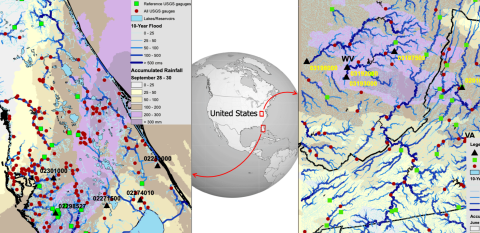
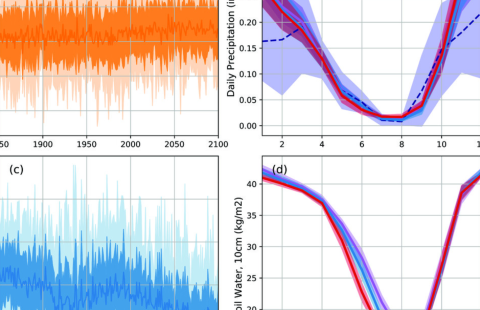
Leveraging a novel hybrid ensemble and optimal interpolation approach for enhanced streamflow and flood prediction

By Mohamad El Gharamti, Arezoo Rafieeinasab, and James L. McCreight

Exploring NWS Forecasters’ Assessment of AI Guidance...

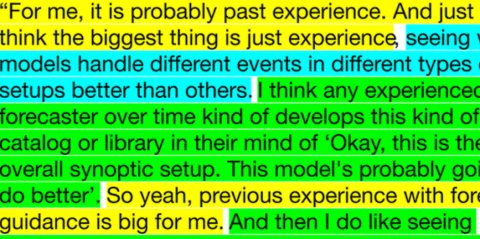
Exploring NWS Forecasters’ Assessment of AI Guidance Trustworthiness

By Mariana G. Cains, Christopher D. Wirz, Julie L. Demuth, et al.

On a Structural Similarity Index Approach for Floating...

On a Structural Similarity Index Approach for Floating-Point Data

By Allison H. Baker, Alexander Pinard, and Dorit M. Hammerling

A Machine Learning-Based Approach to Quantify ENSO...

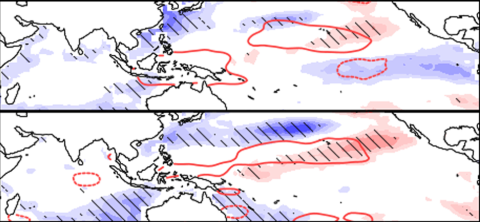
A Machine Learning-Based Approach to Quantify ENSO Sources of Predictability

By Ioana Colfescu, Hannah Christensen, and David John Gagne

Integrating Farmers’ Perspectives into Earth System Model Development: Interviews with...

Integrating Farmers’ Perspectives into Earth System Model Development: Interviews with End Users in the Willamette Valley, Oregon, to Guide Actionable Science

By Kelsey Emard, Olivia Cameron, William R. Wieder, et al.

Exploring Non-Gaussian Sea Ice Characteristics Via...

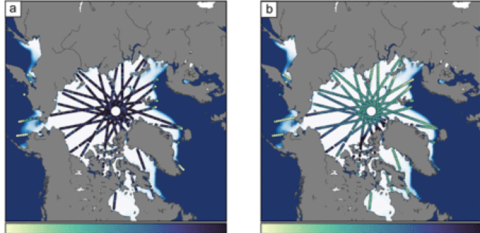
Exploring non-Gaussian sea ice characteristics via observing system simulation experiments

By Christopher Riedel and Jeffrey Anderson

Increasing the Reproducibility and Replicability of...

Increasing the Reproducibility and Replicability of Supervised AI/ML in the Earth Systems Science by Leveraging Social Science Methods

By Christopher D. Wirz, Carly Sutter, Julie L. Demuth, et al.

Last Glacial Maximum Pattern Effects Reduce Climate...

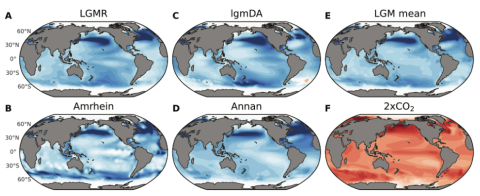
Last Glacial Maximum pattern effects reduce climate sensitivity estimates

By Vincent T. Cooper, Kyle C. Armour, Gregory J. Hakim, et al.

Trust and Trustworthy Artificial Intelligence...

Trust and trustworthy artificial intelligence: A research agenda for AI in the environmental sciences

By Ann Bostrom, Julie L. Demuth, Christopher D. Wirz, et al.
Pagination

  • First
  • Previous
  • Page 1
  • Page 2
  • Page 3
  • Current page 4
  • Page 5
  • Page 6
  • Page 7
  • Page 8
  • Next
  • Last
Subscribe to

NSF NCAR

  • NSF NCAR Homepage
  • ACOM | Atmospheric Chemistry Observations & Modeling
  • CGD Laboratory
  • CISL | Computational & Information Systems
  • EdEC | Education, Engagement & Early-Career Development
  • EOL | Earth Observing Laboratory
  • HAO | High Altitude Observatory
  • MMM | Mesoscale & Microscale Meteorology
  • RAL | Research Applications Laboratory

UCAR

  • UCAR Homepage
  • Community Programs
  • Education & Training
  • For Staff
  • Government Relations & External Engagement
  • Member Institutions
  • Tech Transfer & Engagement
  • University Collaboration

Subscribe to NCAR|UCAR News

Follow NCAR|UCAR

© 2026 UCAR

  • Privacy
  • Cookies
  • Web Accessibility
  • Terms of Use
  • Copyright Issues
  • Sponsored by U.S. NSF
  • Report Ethics Concern
  • Staff Login
Postal Address: P.O. Box 3000, Boulder, CO 80307-3000 • Shipping Address: 3090 Center Green Drive, Boulder, CO 80301
NSF Logo

This material is based upon work supported by the NSF National Center for Atmospheric Research, a major facility sponsored by the U.S. National Science Foundation and managed by the University Corporation for Atmospheric Research. Any opinions, findings and conclusions or recommendations expressed in this material do not necessarily reflect the views of the U.S. National Science Foundation.