CISL Annual Report: FY2025
The CISL Annual Report for Fiscal Year 2025 highlights a year of significant progress and innovation driving advancements in Earth system science and providing critical resources and support to both the NSF NCAR and university communities. This year saw the launch of the rebranded Geoscience Data Exchange (GDEX), significant advancements in artificial intelligence and machine learning (AI/ML) for weather prediction, and growing interest in CISL’s high-performance computing (HPC) resources from the Earth system science community.
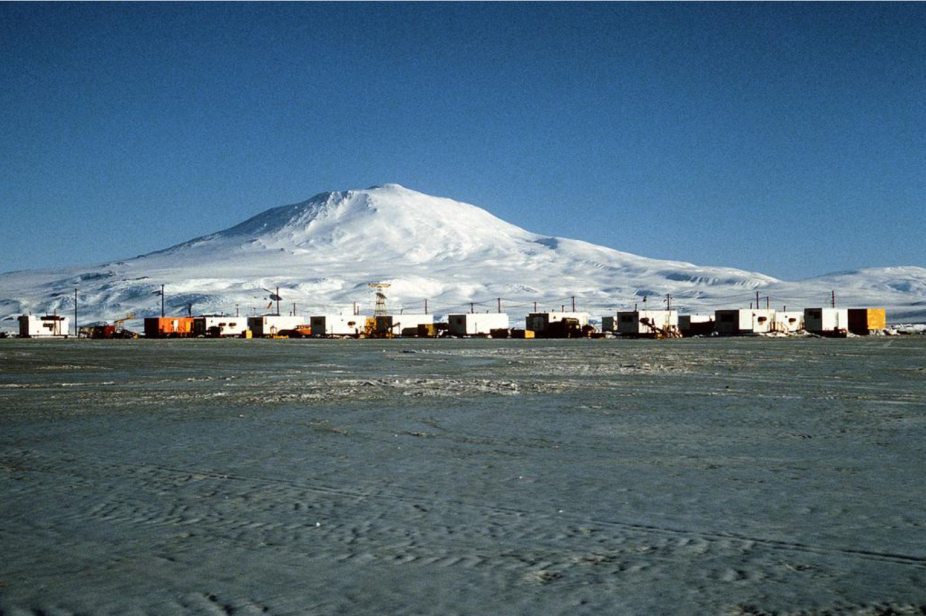
Learn how AMPS powers Antarctic operations.
A highlight of the year was the twenty-fifth year of continuous service for the Antarctic Mesoscale Prediction System (AMPS). AMPS is a critical resource for the three NSF-managed U.S. bases in Antarctica, providing reliable, twice-daily forecasts using CISL’s supercomputers. The CISL team ensured this long-running program’s reliability by effectively managing infrastructure, collaborating closely with forecasters, and utilizing cloud solutions, which is vital for the safety of international research and logistics teams operating in the remote polar region.
CISL’s foundational research was also recognized this year when CISL emerita researcher Dr. Annick Pouquet was awarded France’s prestigious Knight of the National Order of Merit (Chevalier dans l’Ordre National du Mérite). Conducted by the Ambassador of France, the ceremony honored Dr. Pouquet’s pioneering work on multi-scale interactions in geophysical fluid dynamics, which has transformed the understanding of atmospheric, oceanic, and solar phenomena, including her namesake, the Politano-Pouquet law.
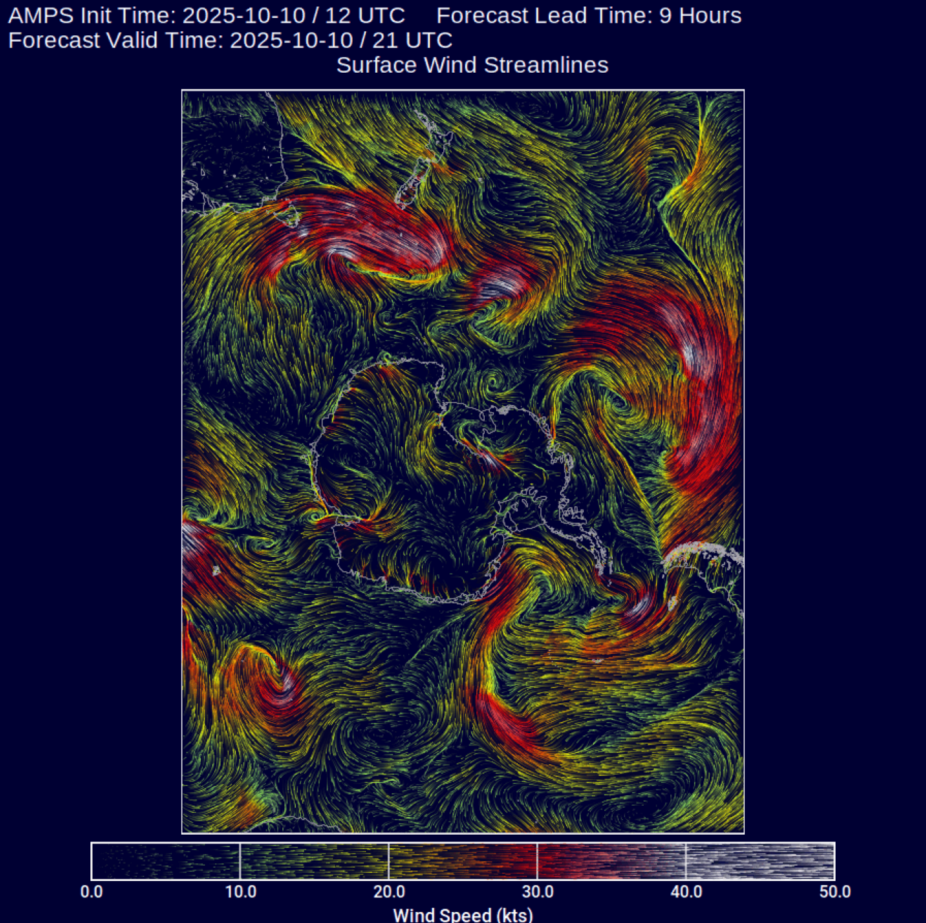
An example of an AMPS-generated weather visualization from the AMPS web page.
Report contents
CISL By the Numbers FY25
Data Commons and Data Services
Artificial Intelligence and Machine Learning Research
Software Engineering for Heterogeneous Exascale Platforms
Computing for the Earth Science Community
NWSC Facility
Outreach and Education
Data Commons and Data Services
This year marked a pivotal transition in data services with the deployment of the Geoscience Data Exchange (GDEX). The new integrated data commons enhances data discoverability and accessibility, serving as a robust foundation for future data science research.
GDEX continues NSF NCAR’s decades-long history of curating and delivering datasets for the Earth system science community. In FY25, the popular Research Data Archive (RDA) had grown to over 14 PB of archived data, supporting more than 28,000 unique users and resolving over 400 help desk tickets related to data access. GDEX now encompasses all the datasets from RDA and more. Today, the GDEX system is fully operational, having onboarded all migrated data.
Unifying Earth System Science Data at NSF NCAR
NSF NCAR’s Geoscience Data Exchange – Integrated Research Data Commons (GDEX).
The official launch of GDEX on September 9 was a major accomplishment for CISL’s Information Science and Services (ISS) in FY2025. This strategic initiative unified three NSF NCAR data repositories—the RDA, the Climate Data Gateway (CDG), and the legacy Geoscience Data Exchange repository—into a single, modernized, analysis-ready research data commons.
The vision for GDEX is to democratize data by creating a trusted data ecosystem that is accessible to all and built for community leadership. Its overarching goal is to make Earth system science data more Findable, Accessible, Interoperable, and Reusable (FAIR), supporting collaboration and new scientific discovery. GDEX also lays the groundwork for AI/ML-driven research, aiming to improve the efficiency and speed of the development of AI-based science applications.
To ensure development met user needs, the team established GDEX user focus groups. These groups gathered feedback, specifically concentrating on the usability of the RDA web user interface, which led to a set of recommended changes to enhance the user experience. Further refining the data ecosystem, data curation focus groups rigorously tested the existing RDA data curation tools. Their efforts identified functional gaps, which subsequently inspired iterative updates to the tools. CISL staff also informed the process, publishing over 5PB of new datasets and provided valuable feedback that shaped the future development roadmap.
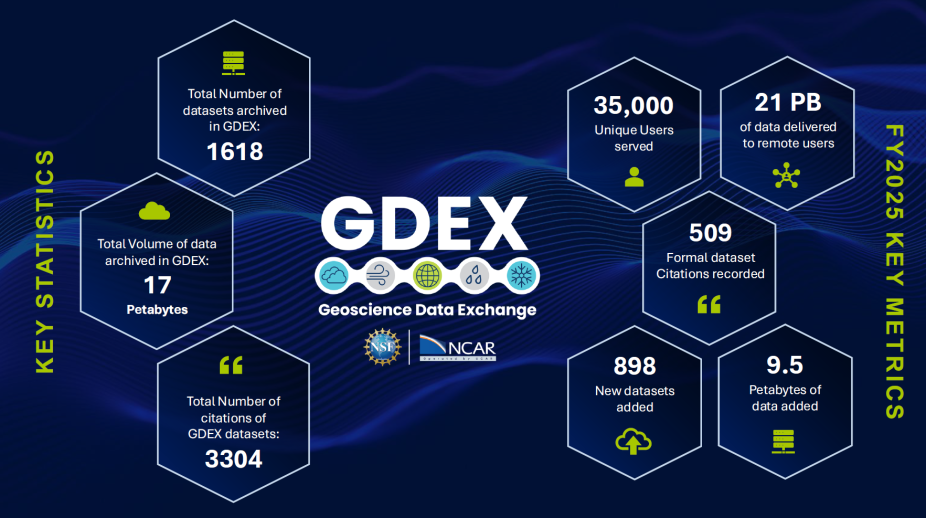
GDEX statistics from FY25.
The team further advanced the process by deploying alpha and beta versions of the GDEX community data curation tools. These deployments, which included updates to both command-line and web UI-based tools, proved the tools were suitable for GDEX needs and were augmented based on continuous user feedback.
Additionally, to broaden access, the team integrated CISL’s data services with the Open Science Data Federation (OSDF). This integration makes all GDEX datasets readily accessible to external users through the OSDF platform. In an effort to demonstrate GDEX capabilities and support AI/ML research, the team converted six datasets to analysis- and AI-ready access structures utilizing the Pangeo software stack. This transformation enhances their utility for advanced research through seamless integration into OSDF/Pelican software libraries.
Artificial Intelligence and Machine Learning Research
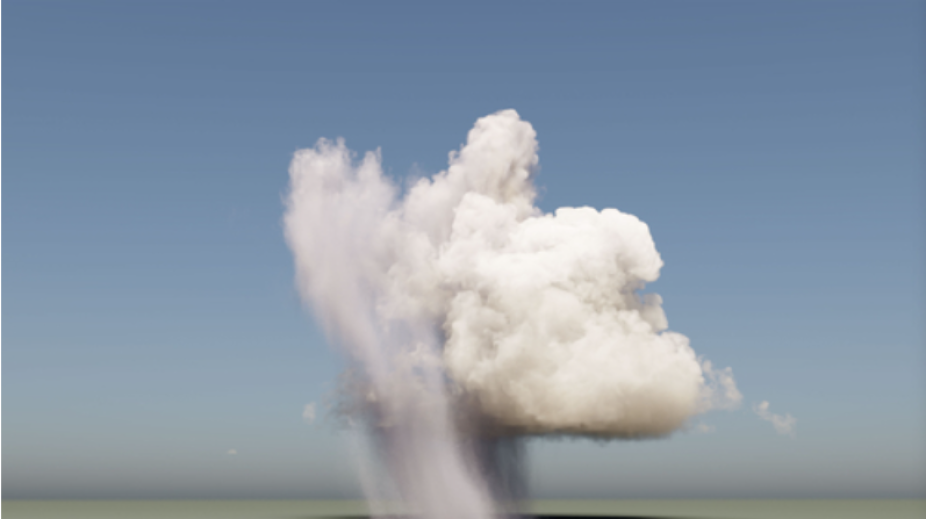
During FY25, three visualizations related to Atmosphere Structure and Dynamics (ASD) were completed. A Cloud Model 1 (CM-1) visualization of a cumulus-congestus cloud, one of the three, was featured at the "Art of HPC" event at the 2024 International Conference for High Performance Computing, Networking, Storage and Analysis (SC24) in Atlanta, Georgia.
This year, CISL significantly amplified its focus on AI/ML research. This intensified commitment is dedicated to developing and supporting systems designed to address critical challenges in Earth system science. CISL launched its new IMPACT section (Intelligent Methods, Prediction, Analysis, and Community Tools), dedicated to accelerating the integration of AI/ML into Earth system science. IMPACT aims to develop scalable, intuitive AI/ML tools specifically for ESS workflows and applications, while also evaluating new technologies. This section is working to simplify complex AI workflows, develop intuitive interfaces, and offer practical solutions. This work will improve predictive understanding, meet computational demands, and support decisions in Earth system science.
MILES to Go for AI
Another initiative launched in FY25, NSF NCAR’s Community Research Earth Digital Intelligence Twin (CREDIT) is an open, foundational platform for developing and deploying AI Earth system models. CREDIT enables customization of components throughout the whole AI model development pipeline, including flexible data processing, choice of model architecture, incorporation of physics constraints during both training and inference, quantification of uncertainty, and calculation of key diagnostics. The latest CREDIT release introduced several enhancements, such as vertical interpolation, integration with Global Ensemble Forecast System (GEFS) data, support for training CAMulator models, and new model architectures.
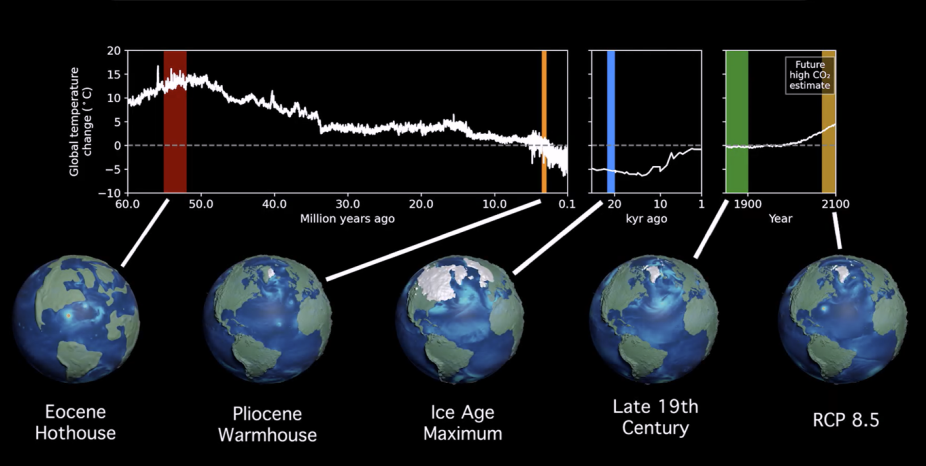
A paleoclimate visualization, one of three FY25 ASD visualizations. All these visualizations are publicly available.
The team completed hindcasts of global CREDIT AI numerical weather prediction (NWP) models with Derecho. Analysis and verification of these models were published in npj Climate and Atmospheric Science, assessing their accuracy and physical consistency. Additionally, the team finalized an architecture and produced hindcasts for a regional AI NWP model trained on the CONUS404 dataset. This model proved stable for long rollouts and effectively captured high-resolution variable relationships.
CISL’s core AI/ML team, the Machine Integration and Learning for Earth Systems (MILES) group, also released an updated version of its uncertainty quantification software, Generalized Uncertainty for Earth System Science (GUESS). MILES GUESS is an open-source Python package for developing evidential and ensemble neural networks for uncertainty quantification in both Keras and PyTorch, supporting research for a wide range of applications spanning winter weather, power outages, and land surface model emulation. This new version features improved documentation and updated implementations of evidential models for both Keras and PyTorch.
GeoCAT, UXarray, VAPOR and Visualization
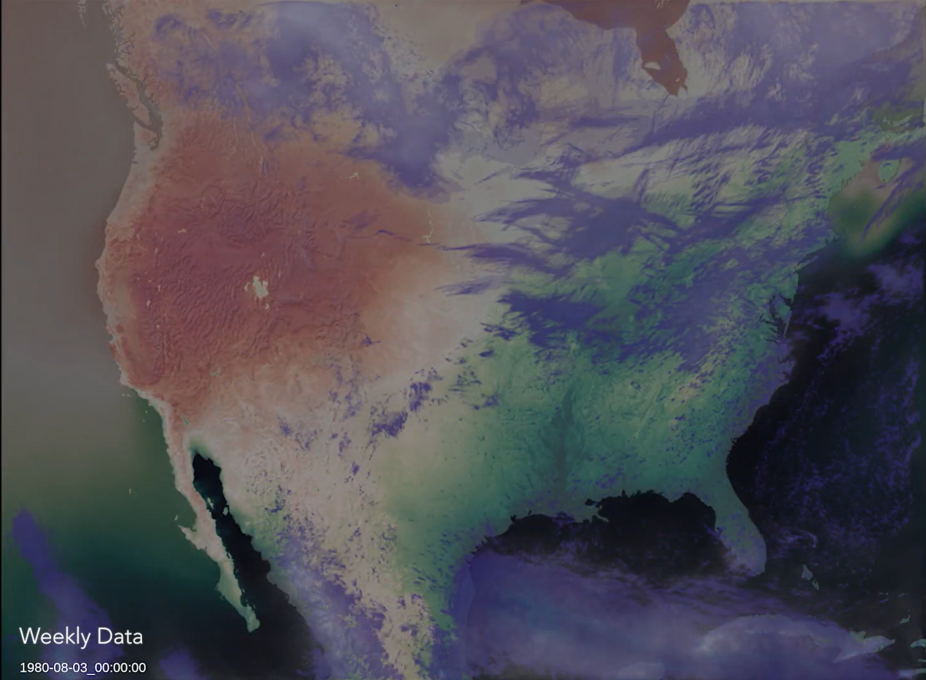
Animation of 40 years of CONUS404 data illustrating the transition from weather to climate.
In addition to the MILES group, CISL’s new IMPACT section encompasses the teams responsible for developing the Geoscience Community Analysis Toolkit (GeoCAT), UXArray, and VAPOR software, and for providing visualization and user experience expertise. As part of IMPACT, these teams will turn more focus to supporting AI-related workflows. Their FY25 accomplishments included a number of software releases and training activities.
GeoCAT is an open-development suite of projects dedicated to creating scalable software toolkits for data analysis and visualization within the Scientific Python Ecosystem. For FY25, the team completed the GeoCAT-examples gallery, which now offers a detailed, original roadmap of plotting functionality. The gallery showcases over 150 plotting examples across 27 distinct visualization categories, including contours, streamlines, and Taylor diagrams. Further, the team launched initial functionalities for GeoCAT-applications, which include entries in both its NCAR Command Language-to-Python (NCL-to-Python) Index and Applications sections, as well as its Python Applications section.
Another significant accomplishment for the GeoCAT team was the completion of a detailed coverage analysis of NCL analysis routines within the scientific Python ecosystem. This initiative involved an internal investigation comparing NCL functionality to GeoCAT capabilities. As a result of this ongoing work, the GeoCAT-applications' publicly available NCL Index and NCL-to-Python resources continue to be expanded.
The team also established the VAPOR Python Utilities Project, an open-source initiative that encourages community contributions to VAPOR's Python API. VAPOR is a software tool for data visualization and efficient exploration of very large or complex 3D datasets.
The GeoCAT and UXarray teams also delivered a half-day short course, titled "Data Visualization in Python: Leveraging Community Tools for Earth System Science Across Scales," at the 2025 American Meteorological Society (AMS) annual meeting. The course attracted 25 participants (18 in-person, 7 virtual.
During FY25, three visualizations related to Atmosphere Structure and Dynamics (ASD) were completed. A Cloud Model 1 (CM-1) visualization of a cumulus-congestus cloud, one of the three, was featured at the "Art of HPC" event at the 2024 International Conference for High Performance Computing, Networking, Storage and Analysis (SC24) in Atlanta, Georgia. All these visualizations are publicly available.
Another key accomplishment was the launch of a new visualization gallery website. This initiative was undertaken to enhance maintainability and discoverability. Designed with a modern aesthetic, the website offers simplified post updates and integrates Google Analytics to track user trends.
Finally, during the summer, the team completed User Experience (UX) and Design Thinking methodology initiatives, including a Job-to-be-Done (JTBD) case study with VAPOR. They also organized an organization-wide basic UX training through the Nielsen Norman Group (NN/g). The training session saw 46 staff members attend and achieved a strong rating of 4.38/5.00 based on an exit survey. A high 90% retention rate for the full-day workshop demonstrated significant participant interest. Additionally, the team established a UX community of practice, the User-Centered Science Collective, which now has 21 members.
Data Assimilation Research
During FY25, CISL made significant progress in data assimilation research, focusing on enhancing the capabilities of the Data Assimilation Research Testbed (DART) and expanding its application to new models and projects. Key accomplishments include the following:
The Data Assimilation Research Testbed (DART) now features new Hybrid Ensemble Algorithms. After extensive testing across diverse physical applications, these algorithms were merged onto the DART trunk and subsequently released, making them available to the entire DART user community.
A design specification for a DART Refactor was finalized to incorporate ensemble smoothers and initial strongly coupled capabilities. Collaborating with the Joint Effort for Data assimilation Integration (JEDI) team, prototype code was developed that demonstrates arbitrary lag ensemble smoothers and advanced external forward operators, including suggested data structures. Additionally, the DARTLAB tutorial, a MATLAB-based guide to ensemble data assimilation using DART software, was updated with the most recent algorithmic improvements. These updated materials were used in a DART tutorial held at the University of Michigan.
Observation space diagnostics for the Community Earth System Model (CESM) Regional Ocean and Carbon Configurator with Data Assimilation and Embedding (CROCODILE) were completed using a Python prototype. This facility supported several DART applications, including presentations to collaborators on the Indonesian ocean assimilation system. Furthermore, a prototype Regional Ocean Modeling System (ROMS) interface was completed as the first deliverable for the Indonesian project. Finally, a prototype Aether Cube Sphere Model Interface (a space weather model) was completed and used as the base code for the hackathon at the University of Michigan.
Software Engineering for Heterogeneous Exascale Platforms
In FY25, CISL launched a new software engineering section, Applied Computational Science (ACS), to transform how the organization develops and optimizes scientific software. A primary objective is to address computational bottlenecks that currently limit research scale and scope; efforts will focus on collaborative, team-based development to optimize software for contemporary computing architectures. Key areas include faster algorithms, parallelization, improved I/O, lossy compression, and software verification, all while adopting modern software engineering practices like continuous integration and automated testing.
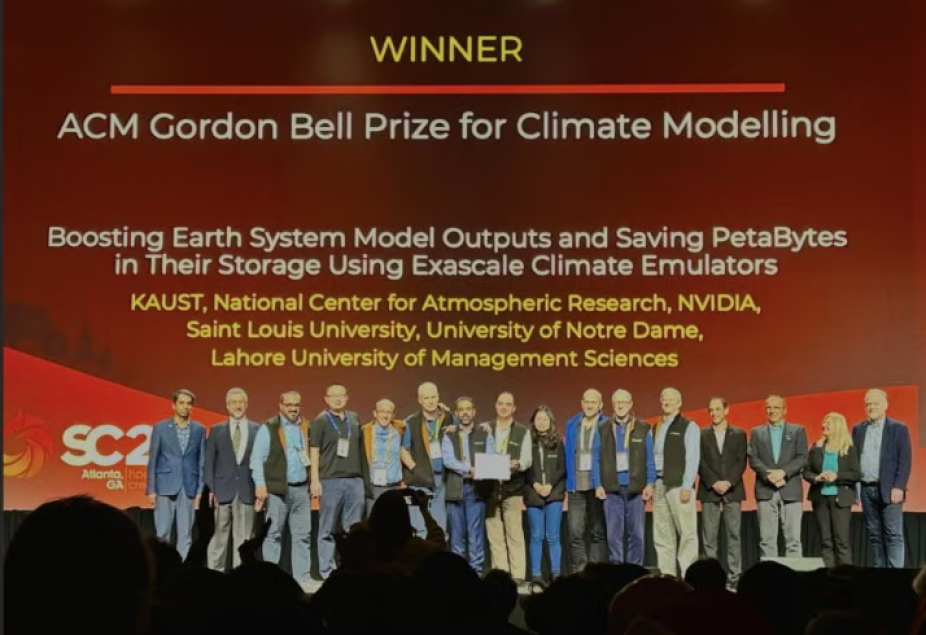
The winning team receives the 2024 ACM Gordon Bell Prize for Climate Modeling at the SC24 conference.
One of CISL’s software engineering highlights for the year happened at SC24. CISL’s Dr. Allison Baker was part of a 12-member team awarded the 2024 ACM Gordon Bell Prize for Climate Modeling for their project, "Boosting Earth System Model Outputs and Saving PetaBytes in Their Storage Using Exascale Climate Emulators." This pioneering effort presented an exascale climate emulator, achieving unprecedented spatial and temporal resolutions of 3.5km at hourly intervals. This advancement showed the potential for reducing computational and storage requirements for high-resolution Earth System Model simulations, while simultaneously allowing for more cost-effective access to and analysis of ultra-high resolution climate data.
The team's other FY25 accomplishments included:
- CI/CD Workflow for SAMURAI Code: A continuous integration and continuous delivery/deployment (CI/CD) workflow has been implemented for the Spline Analysis at Mesoscale Utilizing Radar and Aircraft Instrumentation (SAMURAI) code. This workflow, which includes automated testing and a code coverage check for new or modified code, is executed on Derecho for every new pull request.
- GPU Version Optimization of RRTMGP within CAM: The Graphics Processing Unit (GPU) version of the Rapid Radiative Transfer Model for GCMs—Parallel (RRTMGP) has been optimized within the Community Atmosphere Model (CAM) as part of the EarthWorks project. The refined interface code is now integrated into the CAM for EarthWorks code stack.
- GPU Version Optimization of CLUBB within CAM: The GPU-accelerated version of Cloud Layers Unified By Binormals (CLUBB) has been optimized and integrated into both CAM and EarthWorks. A publication detailing this work is currently in preparation
Computing for the Earth Science Community
The CISL-operated computing environment continued to be a cornerstone of scientific discovery in FY25. This robust environment encompassed NSF NCAR’s high-performance computing (HPC), data analysis, visualization, and artificial intelligence/machine learning (AI/ML) hardware and software environments. Thanks to the efforts of CISL staff, the Derecho HPC system achieved 95.9% user availability and 82.1% utilization. Derecho and Casper delivered 1.7 billion core-hours and 2.2 million GPU hours, supporting 2,700 unique users from over 420 universities and institutions.
Service for a Growing Community

Historical Angkor Wat, the subject of a recent WHOI-led climate analysis that utilized CISL computing resources.
In FY25, CISL computing resources supported over 1,200 research projects, while 678 published and peer-reviewed articles and books cited CISL datasets. The findings published by university users of Derecho spanned a wide range of Earth system science areas:
- Southeast Asian Climate Analysis: Researchers from the Woods Hole Oceanographic Institute (WHOI) used NSF NCAR data and the Casper cluster to study climate-civilization links in Southeast Asia, offering insight into how climate events led to the collapse of ancient empires.
- Wind Speeds: A Johns Hopkins team utilized the Cheyenne supercomputer to create a new model and simple formula for predicting atmospheric boundary layer wind velocity, improving contaminant dispersion modeling and wind farm design.
- Amazonian Carbon/Water Cycles: A Princeton-led team used Cheyenne and Derecho to develop "flux partitioning" methods, distinguishing plant transpiration from soil evaporation. Their work resulted in a publicly available dataset for 47 U.S. sites.
- Soil Moisture: Research led by Auburn University improved subseasonal soil moisture forecasts by finding that the land's initial state accounts for 91% of forecast skill, aiding planning for drought and wildfires.
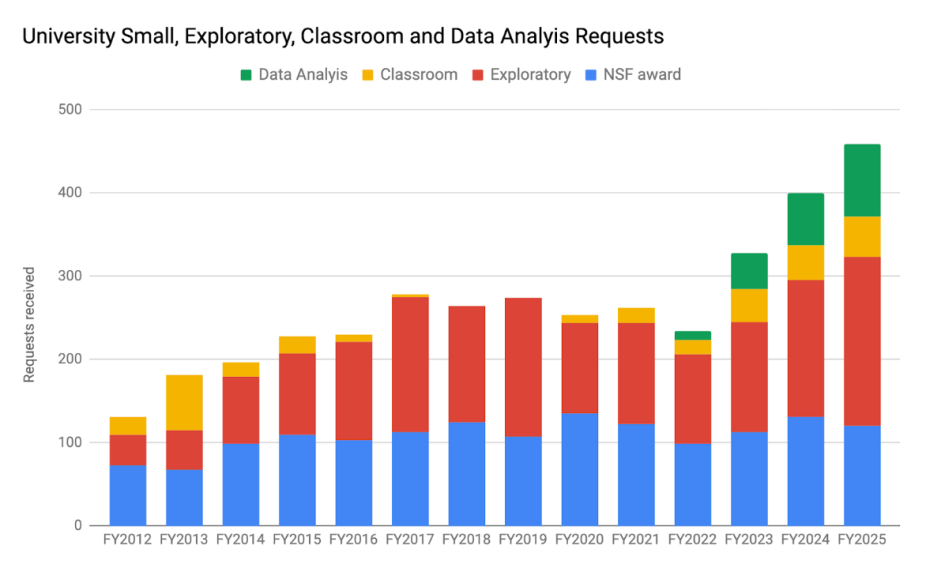
University Small, Exploratory, Classroom and Data Analysis Requests.
In FY25, NSF NCAR processed a total of 79 large requests from universities through the CISL HPC Allocations Panel (CHAP). The panels recommended awards totaling 979 million core-hours on Derecho, 823,000 GPU-hours on Derecho, and 3.1 PB of Campaign Storage. Additionally, Small allocation requests from the University community continued to surge, with 459 requests for small (NSF-supported), exploratory (unfunded), classroom, and data analysis allocations, a 15% increase over the prior year. The growth stemmed from growing interest from graduate students and others eligible for Exploratory allocations, as well as Data Analysis requests enabling researchers to analyze NSF NCAR-hosted datasets on Casper.
Evolving to Meet Future Needs
The new CISL on-premise cloud environment, CIRRUS, entered production in FY25, offering a modern container-based computing platform to support research workloads. The CIRRUS platform is the next-wave new technology stack to provide capabilities that complement existing HPC infrastructure, with flexible compute options, GPU access, and proximity to NSF NCAR datasets.This cloud-native approach improves delivery speed and flexibility by simplifying version control, streamlining codebase rollouts, and easing change reversions. Researchers can leverage Git-based CI/CD workflows, and tools like JupyterHub, Binder, Harbor, and GitHub Actions Runners are available.
The team also completed efforts and proof-of-concept work to identify a replacement for the current object storage system. An IBM General Parallel File System (GPFS) object storage was selected due to its cost-effectiveness, technical suitability, and the ability to leverage existing licenses. A new storage system was installed at the NCAR-Wyoming Supercomputing Center (NWSC) to replace the existing Stratus infrastructure and consolidate home, applications, and object storage functions. The project is on track for testing, integration, and operational readiness. In addition, 5 PB of new tape were deployed to augment the low-cost tape pool. Two new DirectData Networks (DDN) disk subsystems were deployed and integrated into the Campaign Storage parallel filesystem, replacing older systems.
Training a New Generation of Users
Throughout FY25, CISL supported the HPC user community by providing essential support, expert consulting services, and comprehensive documentation to facilitate research and computational activities.
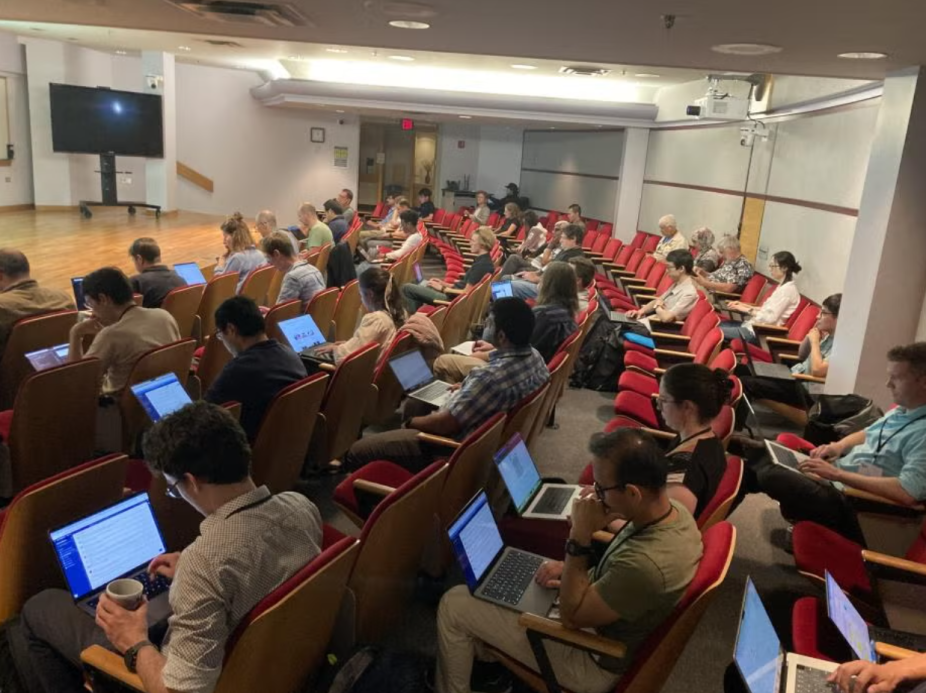
Participants in the NSF NCAR node of the Digital Earths Global Hackathon in May 2025.
The NSF NCAR node of the Digital Earths Global Hackathon, a worldwide event organized by the World Climate Research Programme, brought together approximately 50 participants at its Foothills Lab in Boulder, Colorado. This event, held from May 12-16, 2025, focused on developing best practices for analyzing data from kilometer-scale climate models, which produce vast and complex datasets. CISL software engineers from the IMPACT section served as facilitators for the Digital Earths Global Hackathon 2025, providing in-person and online technical support and addressed feedback. Participants made significant scientific progress, generating numerous plots and Jupyter notebooks, and facilitating data intercomparison across different models, including those from NSF NCAR (MPAS, CESM) and the German Climate Computing Center’s ICON model. Every group quickly produced significant results within the first half-day, demonstrating rapid productivity among participants. This collaborative effort provided a unique opportunity for scientists globally to connect and advance the critical field of kilometer-scale model analysis, with some groups even aiming to publish their findings.
From April 7–10, 2025, CISL hosted the annual Improving Scientific Software (ISS) conference in Boulder, CO, with 100 attendees. The program featured 42 talk submissions, two tutorials, and three keynote speakers. Eight proceedings submissions were accepted, with a notable shift to Jupyter Notebook-style proceedings.
Two annual GPU Hackathons were supported in partnership with the National Oceanic and Atmospheric Administration (NOAA) and the National Renewable Energy Laboratory (NREL), pairing code developers with hardware experts.
Twice-annual New User HPC Training events were hosted in December and May to introduce new users, summer interns, and postdocs to NSF NCAR’s HPC resources. The curriculum covers account access, storage management, and the use of systems like Derecho, Casper, and JupyterHub. Dedicated HPC support services were also provided for the annual Community Earth System Model (CESM), Model for Prediction Across Scales (MPAS), and Weather Research and Forecasting (WRF) summer training events. This included tutorial execution and direct participation of HPC consultants to resolve access and utilization issues.
Finally, the team recently completed its annual publication-collection survey of university users of CISL’s computational environment. The survey received 15% more responses than last year, and the community reported nearly 700 works published during FY25, including 101 doctoral dissertations and master’s theses completed during the year. Overall, respondents were very satisfied with CISL’s computational and support offerings, and the average overall rating, covering more than 400 responses, was a tremendous 4.7 out of 5.
NWSC Facility
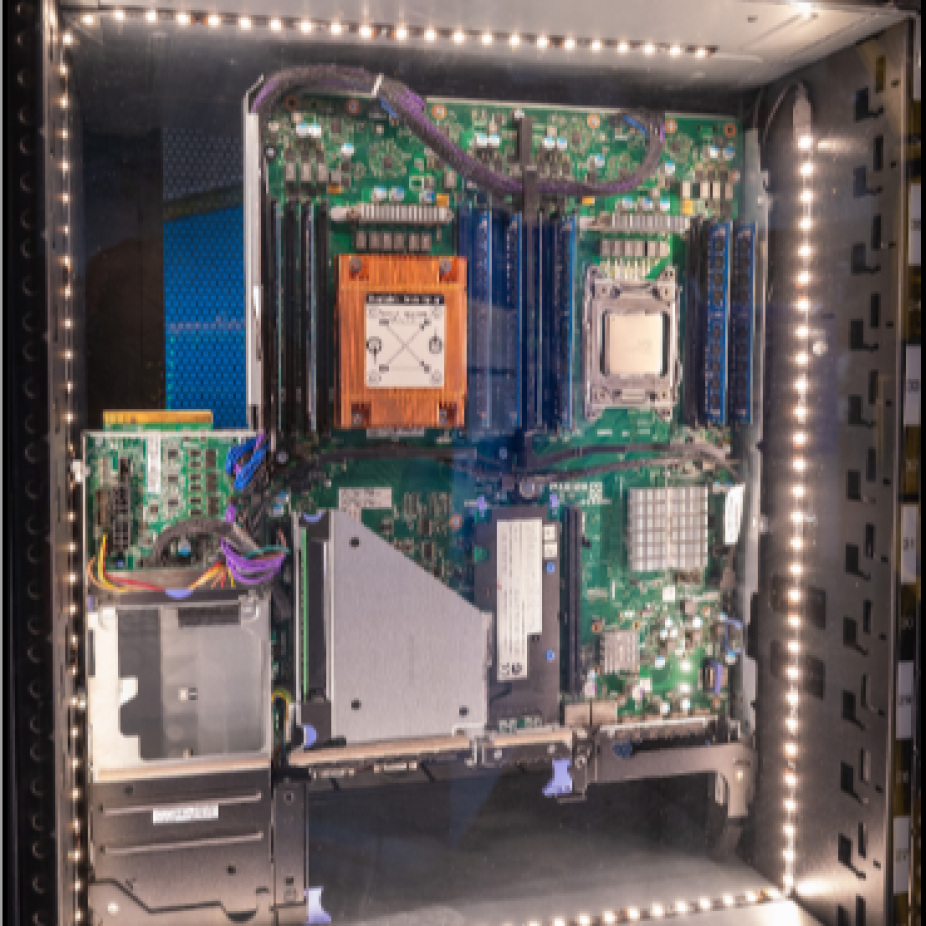
NWSC infrastructure.
The NWSC Facility ensures a robust and reliable environment for NSF NCAR’s HPC and storage resources. A highlight of the year was the implementation of warm water cooling, which has demonstrated reported value in energy efficiency and cost savings. The Infrastructure Services Group in Cheyenne (ISGC) at NWSC incrementally raised the computer room cooling loop temperature from 65°F to 72°F over six weeks, ensuring continuous operations without downtime. These efforts allow NWSC to use free-cooling systems for most of the year, anticipating significant cost savings and a lower Power Usage Effectiveness (PUE). Using 72°F during the hottest months eliminated the need for chiller use, an improvement over previous years. They also aided in deploying the new USGS-1 HPC system and are finalizing mechanical and electrical fit-up proposals.
NWSC mechanical system controls received hardware and software upgrades for the Building Automation Head-End Server. The physical layer networking system infrastructure was expanded into upper and lower Module A to support future HPC equipment, and this deployment is ongoing as more systems are added. The necessary five-year electrical and mechanical maintenance for critical equipment was completed, with portions of the information technology (IT) equipment remaining in production throughout the outage.
Education and Outreach
Throughout the year, staff engaged in outreach to foster a collaborative community. Outreach activities are designed to engage the community and promote Science, Technology, Engineering, and Mathematics (STEM) education and integrate data from initiatives like the Internet of Things Weather Stations (IoTwx).
SIParCS Program
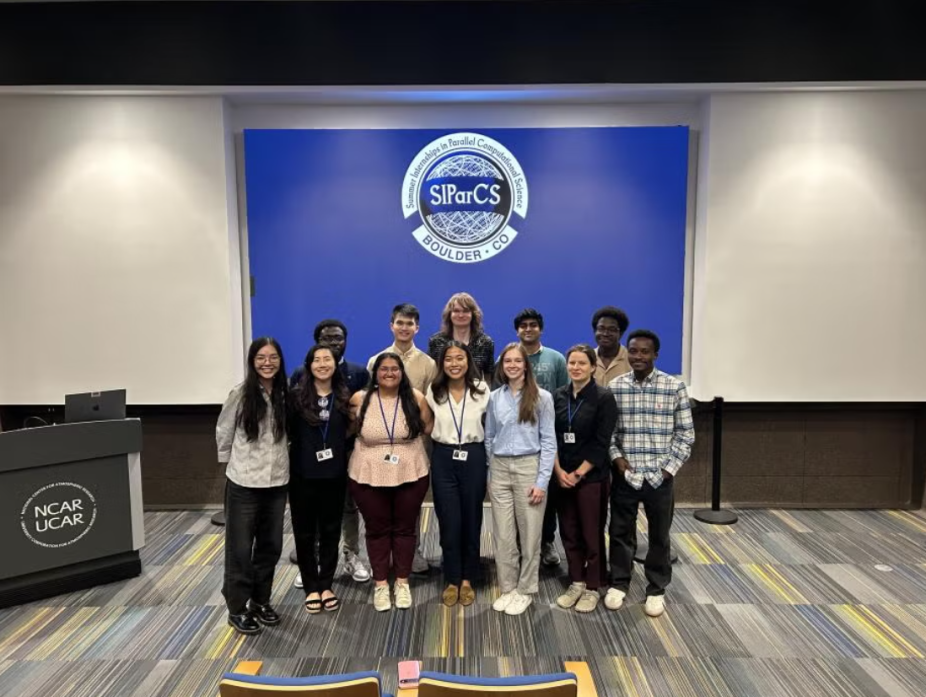
The Summer 2025 SIParCS interns.
The Summer Internship in Parallel Computational Science (SIParCS) program continues to attract and develop future talent in computational science. The FY25 SIParCS program began on Monday, May 19, and concluded on Friday, August 1. Over this 11-week period, 12 interns from various institutions across the country—both undergraduates and graduates—gained invaluable technical experience under the guidance of distinguished CISL mentors. In addition to the technical work, the SIParCS program also incorporated social activities to foster a fun and supportive summer for the interns.
The summer ended with the student poster session and oral presentations held on Tuesday, July 29. The event featured notable presentations such as "Enhancing Scientific Onboarding in CIRRUS Through Cloud-Native Infrastructure for Earth System Scientists" by Shilin Chhabra of the University of Wisconsin-Madison, and "Scalable Vector Calculus Operators for Geoscientific Analysis on Unstructured Grids in UXarray" by Esther Gallmeier of Cornell University.
Wyoming Outreach and Engagement
Education efforts included the development and execution of a new informal education program, initially called "Scouts Day," which has evolved into the Junior STEM Stem, STEM Star, and NSF NCAR Achiever programming and awards for K-12 students. Furthermore, staff launched a new teacher newsletter to promote upcoming SciED teacher training and field trip opportunities. A dedicated outreach session was also conducted for teachers, focusing on NSF NCAR educational resources and fostering community engagement.
Community and public outreach efforts spanned key events throughout the year. In October 2024, staff participated in Jessup Elementary's "Mad Scientist Day," conducting science demonstrations and providing information on the center and opportunities at Cyber Cheyenne. In November, staff represented the organization at SC24. In February 2025, staff conducted science demonstrations and shared NWSC field trip details at Davis Elementary STEM Day in Cheyenne, Wyoming. In March, the team judged the Wyoming State Science Fair, participated in Wyoming Trades Day to highlight trades in supercomputing, and supported EmpowHER, encouraging girls in STEM.